Kategori: English

It is crucial for a company’s management to keep note of the latest trends and directions of not only the market that they are currently doing business in, but also the general trends happening in other sectors, as well as worldwide.

Aside from guiding managers in taking important and informed decisions, these trends will also help companies to spot the market’s movement and needs. As everyone aware, trends tend to change, and they change at a very fast pace. If you can’t keep up, you’ll lose the race.

That is exactly what befell Nokia, the brand once famous for handphones, in the 2010s. It failed to adapt to market trends, and was left in the dust of other companies such as Apple. The point is, there will always be new trends emerging constantly, which leads us to the question: What are this year’s trends?

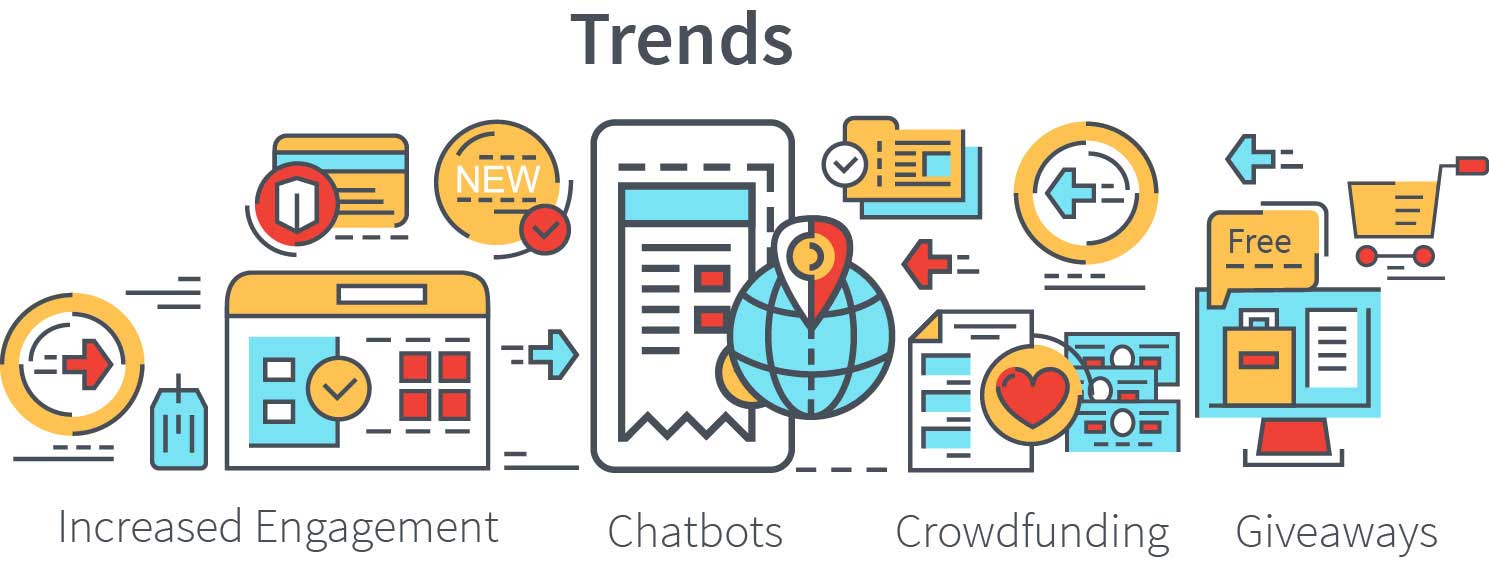
As mentioned above, trends change at a fast pace, but among them, these seem to be the most popular:


1) Elevated Customer Engagement

“The easiest and most powerful way to increase customer loyalty is really very simple. Make your customers happy.”

– Kevin Stirz, author of More Loyal Customers


In this digital age, the customer-business relationship has become even more complex. Nowadays, customers expect businesses to have and to maintain a digital presence—be it on Twitter, Facebook, Instagram, or other such platforms.

You might think that you have that pat down with the creation of your official website, but if you are not a large corporation, customers are not going to search you up just to see if you are offering discounts and such trivial matters.

They will want to know your brand, and the simplest method for them to do so is via social media. What they will want to know is information such as:

  • What’s up with your business?
  • Are you hip?
  • Are you funny?
  • Are you educational?
  • Are you professional and trustable?

If, say, your social media page has interesting, shareable local content with witty captions, then you’re on the right track. The key word here is elevated customer engagement—not just any kind of engagement, which everybody else is doing at this point.

Unless you’re able to handle all queries and complaints, dedicated personnel should be hired to tend to your double-edged pages 24/7. This will make customers feel appreciated and important. It will also win their trust, and ultimately, lead to more business.

Take, for example, AirAsia’s Facebook page. You would think that by the amount of complaints on every single one of their posts that they would lose customers like hair on a balding man, but no. Virtually all grouses are replied to courteously, and their customers keep coming back. Malaysia Airlines takes it a step further by replying to virtually every first comment, even if it is just a simple “good morning”.

This trend of being extra engaging instead of just answering queries or troubleshooting is visible on other local companies’ pages, like Nando’s, Proton, Hokkaido Baked Cheese Tart, The Manhattan Fish Market, myBurgerLab, and Big Bad Wolf Books.

When customers are satisfied with the level of service and engagement offered by a particular business, they will become loyal to that brand. Unlike customer loyalty, which mainly relates to customer spending power, brand loyalty has little to do with the price of goods or services. It is all about how well you engage.


2) Personalised Customer Engagement

“To succeed in business, you need to be original, but you also need to understand what your customers want.”

– Richard Branson, founder of Virgin Group


Each customer wants to feel that they are special and appreciated. A salient point in engagement, other than communication, is personalisation. This is possible by collecting data, usually done by large companies.

Based on research conducted on consumers in the U.K. and Germany, 63% of consumers wanted to have the latest individualised communications from businesses posted on their social media, and 54% of them did not mind sharing their personal data to be able to do so. It is not far fetched to assume that Malaysians feel the same way.

Major companies like Facebook, Google and Amazon are on the forefront in setting the bar for customer personalisation. Among the tools used by these big businesses are demographic targeting, cookies, and social listening.

Ever wondered how Facebook knows what goods or services you are currently eyeing? This is possible via cookies collected from a person’s queries and search engine history. These data can also be used to improve customer experience. Data collected and analysed can accurately pinpoint specific targeted marketing campaigns for unique individuals.

While you might not be able to afford that kind of thing as an SME or start-up, there are always other, more interesting ways to engage your customers personally. That’s where contests and giveaways come in. After all, -who doesn’t love those? Freebies, anyone? It also can’t get any more personal than that.

Back in 2010, GoPro started their daily giveaway campaign online to draw more attention to its growing product line-up. They gave an action camera away every day for five years, to tremendous fanfare, such that it has helped them to become the brand for action cameras.

What did they gain out of the publicity stunt? E-mail addresses. Loads and loads of them. Afterward, the contestants were all bombarded with GoPro marketing material (Which they didn’t mind), and GoPro achieved its goal of growing their user base.

Closer to home, Grab and Uber has been battling it out to out-personalise each other in their battle for market share, with free ride promotions, item deliveries, and event-specific promotions. Know your customers and give them what they want.


3) Chatbots

“Businesses are rapidly embracing artificial intelligence to gain a competitive edge and stay relevant to consumers, as brand engagement will be reimagined next year.”

– Jana Eggers, CEO of Nara Logics


Gartner, a U.S.-based research firm, predicted that only one in three customer service interactions will require actual human interaction in the near future. Currently, due to the limited number of online customer service representatives (Think Facebook), things can get messy.

While customer support is something that can be relegated to India for tech corporations like Dell and HP, the same does not hold true for most SMEs. If a customer service executive isn’t actually hired, the person who does the servicing is usually the secretary, or worse, the busy entrepreneur himself. Not exactly an ideal situation when you’re expanding.

This problem can be solved by chatbots, which are programs that simulate human conversation. They do not require waiting time, and will provide almost instantaneous answers to whatever queries posed. Examples include JiffyBots, Twyla, Helloumi, and Agentbot.

The best thing is that these chatbots can be integrated into websites, Facebook Messenger, Telegram, Twitter, WhatsApp, and other social media platforms. How cool is that? Instead of hiring digital media correspondents, businesses may opt for these bots to do the same tasks, 24 hours a day.

This is made possible because currently, artificial intelligence (AI) has reached a stage in which chatbots can have increasingly engaging and human-like conversations (Yes, even in Bahasa Melayu), allowing businesses to leverage the inexpensive and wide-reaching technology to engage with more consumers.

Businesses are now able to employ chatbots to reply to consumer questions and queries, streamline customer resource and sales, influence purchases, improve social media engagement, and simplify payment processes. While it may take a while for the trend to pick up in Malaysia, it is definitely coming here.


4) Crowdfunding

“Crowdfunding will continue to be an invaluable resource for entrepreneurs. Crowdfunding platforms allow entrepreneurs to easily validate and fund a new product or service all while growing their customer base.”

Michael Banks, founder of FortunateInvestor.com


Different from the traditional business funding exercise where budding entrepreneurs seek wealthy individuals to fund their projects, crowdfunding raises the needed capital from collective efforts of friends, families, customers, or even strangers.

With the mushrooming of crowdfunding platforms locally, like PitchIN, MyStartr, CrowdPlus.asia, Alix Global, ATA Plus, Crowdo, Eureeca, and Ethis Kapital, Malaysian businesses are quite spoilt for choice. At writing time, six of these platforms have been approved by the Securities Commission Malaysia (SC).

These platforms are open to all kinds of projects, from businesses, charities, real estate, arts, films and theatre, and education. In 2015, crowdfunding was estimated to have raised USD 34.4 billion globally—double the volume in 2014. While the numbers for 2016 have not been released yet, should this trend continue, crowdfunding is set to surpass traditional funding practices in the very near future.

Aside from getting more investors to fund a project with more flexible fundraising options, other advantages of crowdfunding include increasing reach, improving project presentation, widespread public relations and marketing media, and validation of concept for the project.

A notable platform for Muslim entrepreneurs to consider is Ethis Kapital, the KL-based crowdfunding company founded by two Singaporeans and two Indonesians. Aiming to bridge Malaysian SMEs with crowd-sourced Islamic finance solutions, it is poised to develop the Islamic sharing economy in Malaysia in the future, and is a viable option for those who wish to keep things Shariah-compliant.


5) Niche Businesses

 “The key to competing and surviving against Wal-Mart is to focus your business into a niche or pocket where you can leverage your strengths in the local marketplace.”

– Mike Bergdahl, author and professional business speaker


Nowadays, entrepreneurs are starting to focus on businesses with niche markets. Niche businesses sell products or services with unique qualities and features for specific demographics at a more premium price to satisfy specific marketing needs. They define small, specific target customers and do all out marketing and sales on this small community.

An example of such a company is Lefty’s, which sells school supplies, kitchen goods, and so on, but only for left-handed people. Statistically, only about 10% of the world population is left-handed, thus making them a unique and niche company.

The advantages of a niche business include fewer competition, increased brand loyalty, ease of conducting business to similar types of customers/markets, and a smaller marketing budget needed.

In Bolehland, we have seen various upscale kopitiam chains taking over the F&B industry by creating a niche since the early 2000s. When that became mainstream, we saw The Teh Tarik Place finding a niche of its own in malls as an upscale Mamak restaurant amidst the Kayus and Pelitas.

Even more recently, building up on the nicheness of ride-hailing apps Uber and Grab locally and Gojek and GrabBike in Indonesia, is Dego Ride, the motorcycle taxi app. It has caused quite an uproar due to the government’s safety concerns, but the point is, the exploration of niche businesses and markets will continue to pave the way forward and is a trend that will not fade away anytime soon.

 

Pengerusi Perbadanan Usahawan Nasional Berhad (PUNB) telah mengumumkan konsep Rent To Own untuk hartanah di bawah PUNB.

Ia adalah usaha untuk membantu usahawan Bumiputera memiliki hartanah yang sedang disewakan dan membeli bangunan baharu mengikut permintaan usahawan pada masa akan datang.

Tan Sri Noh Omar telah dilantik sebagai Pengerusi PUNB yang baharu berkuatkuasa hari ini.

Satu majlis serah terima tugas Pengerusi PUNB dan sambutan ulang tahun ke-29 dianjurkan bagi meraikan pelantikan Noh dan serah tugas oleh Datuk Hazimah.

The Fourth Industrial Revolution (IR 4.0) is upon us, and it is expected to change how we live, work, and communicate. As IR 4.0 picks up speed, we can see a definite shift in business models and employment trends.

This age of cutting-edge technology can mean a lot in terms of advancing small businesses. Nevertheless, to implement these new systems and software could be costly for small business owners. You can still benefit from new and developing technology. Here are a few tips to help your small business thrive without having to dip into your savings:

Customer Interaction

The popularity of social media has taken customer interaction to the next level.

Social media refers to websites and applications that are designed to allow people to share content quickly, efficiently, and in real-time. Facebook, Instagram and Twiter are among the most popular social media sharing sites that are often used by the public to engage with brands and business with a total of 1 billion users as of September 2019, and are expected to reach more than 2 billion in the not-so-distant future.

Changing technologies help you reach more potential customers than ever before, around the clock. Social media platforms, mobile marketing, various types of content marketing, and much more increase the visibility of your business far beyond your local community—often on a reasonable budget.

To maintain customer interaction, all that is required of business owners today is to have a few social media profiles that can be consistently maintained, and to engage customers by responding to their messages, and inviting reviews as well as customer-generated content. This allows you to observe nearly every aspect of your audience’s behaviour, thus providing a wealth of insight into customer motivation. By doing this, business owners will be able to understand their customers better. This also allows them to be more proactive about customers’ wants, which in return increased sales and customer loyalty.

Online Payments

One of the most popular trends in the business world today is e-commerce. Often called online payment, this has become the favoured form of purchasing for most customers. Web-based payment systems make it easy to send or receive payments. Furthermore, they do so while offering a host of payment options. Many of these platforms even offer seamless integration into popular accounting programs.

When you accept digital payments on your e-commerce website, you will expand your customer base to include far more people than before—those who want to pay offline and those who prefer online payment. In addition to that, the introduction of online payments can also attract a more global audience if you use a payment gateway that allows customers to pay in their local currency.

Moreover, one of the appeals of online payments is that they are faster than manual payments. The whole process of making an online payment may only take seconds. The result is immediate confirmation of transactions and improved the cash flow for your organisation. Do some research in advance to know which payment options suits your existing and potential customers. In other words, the more types of payments you accept, the more customers you will attract.

Analytical Tools

This method may be a little more costly than the previous entries but it certainly is the most formidable entry on this list. Companies have widely embraced the use of analytics to streamline operations and improve processes. Nevertheless, applying analytical tools will provide important data that will in turn inform intelligent and capable business decisions.

For instance, using analytical tools, you can gauge the percentage of visitors to your website that browse your site on their mobile browsers, or you can assess your page load speeds. The most common, popular and widely used is Microsoft Excel. Such information will provide a better understanding of your business and the direction in which it is heading. In addition, it also allows you to better recognise new business opportunities that may have been generally neglected, for example, undiscovered client demands.

Thus, with the right application of analytical tools, the potential for growth and profitability becomes endless and more intelligence-based.

As the new industrial revolution gathers speed, small business owners should take advantage of these new technologies to help their business thrive. With the internet and social media at our fingertips every day, the opportunities for business are constantly growing. Nevertheless, it all depends on how we choose to use new technology.

Healthcare has always been viewed as a good industry to venture into, both for businesses as well as individuals who are looking for a positive career prospect. Deemed as a growing business in the country, the market research firm Global Data has stated that the healthcare market in Malaysia will be worth as much as RM 15.9 billion come 2020.

It is known that clients in the healthcare industry are those who face health issues and are in need of care or treatment. While anyone can face health issues requiring medical treatment at any time in their life, such issues tend to increase as people get older, as a natural result of the body’s ageingprocess.

In Malaysia, the biggest consumers of healthcare are senior citizens. The ageing population—those aged 65 and above—is rapidly increasing and will form 7% of the national population as we approach 2020, thus it is highly likely that businesses in this industry will see an increased demand. Together with this, job opportunities, as well as business opportunities for entrepreneurs to provide services for this sector, will also increase.

An Array of Career Opportunities to Choose From

It is no secret that careers in healthcare have always enjoyed a very high demand over the years. When speaking of careers in healthcare, the terms doctor’ and ‘nurse’ is usually the ones that come to mind. However, what is often overlooked is the fact that there are over 50 job opportunities when it comes to working in the healthcare industry. Some of these overlooked careers in healthcare are:

1. Dentist

2. Dental Hygienist

3. Emergency Medical Technician

4. Pharmacist

5. Therapist

Benefitting Entrepreneurs and Businesses

Apart from a wide range of careers to choose from, the increased demand for healthcare services increases business opportunities as well. In particular, the business market is further aided by the growth of e-Health in the industry.

Having created a whirlwind in many other countries over the years, e-Health has now made its debut in Malaysia after a somewhat slow start. Malaysian startups are beginning to pay more attention to the e-Health industry and are determined not to let the country be left behind its neighbours such as Singapore and Indonesia, when it comes to the e-Health sector.

As such, e-Health deserves more attention from investors, policy makers and, particularly, entrepreneurs in the country, as it can work wonders in improving and systemising the healthcare system in our country. It is said that the e-Health sector play a vital role in Malaysia’s health sector in the years to come.

For instance, several private hospitals within the country have begun exploiting mobile apps in order to assist their tech-savvy potential clients to search for doctors and health services, as well as to book appointments and pay for health screenings. Thus, mobile apps that aid in diagnosis and in the monitoring of patient conditions will definitely come in handy as it would cut costs for governments and health care providers in the country.

Meanwhile, e-commerce has the potential for laying the foundation for efficient and effective transactions at a low cost between employers, payers, providers, and patients in the e-healthcare industry. A big player in the e-commerce sector, B2B healthcare e-commerce is able to aid transactions and the exchange of information among vendors, hospitals, insurance agencies, state and federal regulators, and doctors’ offices. This will simplify and improve the healthcare system in our country while bringing it to new heights.

A Bright Future Ahead

The demand and need for healthcare in Malaysia is expected to further increase over the years, and with demand comes more opportunities to improve treatment and diagnoses.

The 2019 Budget saw a lot of improved healthcare plans that benefit both the people and businesses involved in the industry. Among these are the B40 Health Protection Fund, Skim Perlindungan Kesihatan (Health Protection Scheme, Peka) and many other health screening programmes nationwide. The budget also saw a RM 29 billion in allocation for the Health Ministry, which is a 7.8% increase, compared to the RM 27 billion allocation in 2018.

On that account, in 2027 Malaysia’s healthcare market is predicted to grow by 127%, amounting to RM 127.9 billion, compared to the RM 56.3 billion in 2017. The 2019 Budget projected an increase in public healthcare expenditure, and according to Fitch Solutions Macro Research, the government will continue to push forward fundamental healthcare initiatives which will in turn boost the nation’s healthcare market.

On that note, the government has allocated RM 29 billion for the healthcare sub-sector, which is an increase of 7.8% compared to last year’s budget. Out of these RM 29 billion, RM 2.3 billion will be allocated to the health sub-sector, such as the building and maintaining of clinics and hospitals, and improving the existing healthcare facilities, as well as the means of obtaining medical equipments—all of which is in line with the aim to offer better quality in healthcare, as well as increasing accessibility of health services to the public.

Thus, with the backing of the government, and the willingness of entrepreneurs to venture into the market, it is safe to say that the healthcare industry indeed holds fair and bright prospects for keen businesses and individuals.

For 2000 years, China has been a trading centre and the largest economy in the world. Today, it has transformed itself from the 1970’s closed economy to a manufacturing and exporting hub.

Since it instituted reforms in 1978, the country has achieved economic growth averaging 10% annually, lifted almost half of its 1.3 billion populations out of poverty and become the second-largest economy in the world.

Now, it is poised to exert its influence in the start-up ecosystem.

China is no doubt an undisputed leader in Asia. Recently, it has been very successfully growing its own companies, especially start-ups.

Who has not heard of Alibaba founder Jack Ma, who currently is the 23rd richest man in the world in 2017 (Forbes List) with a net worth of USD 33.2 billion?

The power of start-ups cannot be underestimated. They revolutionise the way things are done, and they are industry disruptors.

Of course, there are countless start-ups popping up everywhere around the world, but the Chinese, due to their sheer growth and being an Asian giant are to be especially watched.

Due to their unique culture too, the Chinese are very innovative in coming up with solutions that suit their needs.

From a funding point of view, currently, it has been slowing down in the Silicon Valley.

About 83% of venture funding went elsewhere in 2016 (other than the USA), and China’s influence continues to grow.

Some of the world’s most active investors, such as Sequoia Capital and Lightspeed Venture Partners are increasingly looking east, while the Chinese start-ups, such as Didi Chuxing and Ant Financial Services Group, the financial-services affiliate of e-commerce giant Alibaba Group Holding Ltd., closed the world’s largest private fundraising round for an Internet company at USD 4.5 billion in 2016.

So let us look at some the Chinese start-ups that are poised to do well in the near future. In no particular order, they are:

iDreamsky

Recent Funding: USD 115 million (IPO)
Founder: Jeffrey Lyndon

iDreamsky is a fast growing mobile game enterprise and the largest independent mobile game publishing platform in China.

It localises successful overseas apps for the Chinese market and has become one of the largest mobile game publishing platforms in China with 98.3 million active users and 25.8 million daily active users.


Daojia

Recent Funding: USD 50 million (Series D)
Founder: Hao Sun

Daojia is established in 2010, focusing on online food orders and delivery services targeting at China’s middle class urbanites.

It works with more than 6,000 restaurants and currently has 1 million customers and is still growing at a fast pace.

Daojia operates in eight cities in China with an over 3,000-strong logistics team and delivery staff.

It is aiming at expanding to over 30 other cities all over China this year. Currently, Yum China is in initial talks to acquire the food delivery firm.

Haha Pinche

Recent Funding: USD 10 million (Series A)
Founder: Xuguang Men

Haha Pinche is a carpooling app launched in January 2014 which matches passengers with drivers, connecting drivers and passengers wanting to share the same car for a trip. It provides ratings and allows payment as well.

It is well placed for growth as China’s traffic jams are legendary and with a growing affluent middle class who owns cars and prefers to travel by car, Haha Pinche provides a well needed solution.

Aipai

Recent Funding: USD 38 million (Series C)
Founder: Tienan Wang

Aipai is a video sharing site that focuses on game recordings and allows users to use tools to capture their own footages, edit them, and add effects like music and sound.

It has over 10 million daily active users and 50 million monthly active users.

Mobike

Recent Funding: USD 215 million (Series D)
Founder: Wang Xiaofeng

Mobike is a bicycle-sharing app which helps users find and rent nearby bikes—bright red in colour—at dirt-cheap prices (i.e. USD 1 or RM 4.28 per half hour of riding).

It provides a service to people who needs to get somewhere not too far in a short time, such as a subway station to the office.

It is the world’s largest bicycle operator and in December 2016 made Shanghai the world’s largest bike-share city.

iCarbonX

Recent Funding: USD 145 million (Series A)
Founder: Jun Wang

Shenzhen-based company iCarbonX became a unicorn less than a year after being founded.

The biotech start-up wants to build a one-stop platform that crunches all kinds of data, including genetic information and blood samples, provides health-related insights and recommendations.

Inke

Recent Funding: USD 10 million (Series B)
Founder: Feng Yousheng

Inke founded in 2015 is one of the most popular live broadcasting apps.

It is mobile-first which means users can live stream through their phones instead of their computers.

The app recorded monthly active users of over 16 million in January this year.

Inke Founder, Feng Yousheng noted that the app’s live streaming hosts funnel as many as 50% of their fans to Weibo, WeChat, and other channels in order to sell products and monetise.

On e-commerce sites such as Taobao and JD, live shopping has already taken off, with conversion rates of 32%.

Inke has recently been acquired by Shunya International Brand Consulting in May 2017.

Entrepreneurs need to consistently create and deliver value propositions to customers. Knowledge of our own products and services is paramount as we have to accurately match our customers’ needs. We have to emphasize on the benefits our customers could derive from our offerings rather than blindly spelling out the features of our portfolio.

Every entrepreneur is required to routinely revisit the fundamental concepts of the business. We must always keep a close eye on market trends and the economic climate. Fiery enthusiasm coupled with an undying passion of our career will undoubtedly increase an entrepreneur’s success within the society.

It was extremely challenging to lead Malaysia’s then mega project, Proton. I learned that the secrets to becoming an eminent leader lie in one’s ability to constantly innovate and manage the company efficiently in both its human resource and finances.

A quality workforce will form the very backbone of an organisation thus dictating the success of the organisation. Entrepreneurs have to muster the courage to selflessly devote ourselves to our business and not be afraid to sacrifice a little for growth in profit and productivity. We have to etch our company’s vision on to the back or our heads and never be complacent with our situation, all the while exhibiting professionalism and patience.

At the current financial predicament, the success or even the very existence of a business all boils down to the survival of the fittest. Therefore, it is imperative to study cultural aspects and local issues on overseas markets if one is to thread past their comfort zone.

We, entrepreneurs and business leaders, must continuously interact with business and market environment. Not forgetting the importance of building up winning teams and never to work in isolation. Lastly, as for being a good manager – is through getting results by working with other members of the organisation.

‘In business, only the strong will survive and the weak will be left behind. The success of the strong will determine the continuity of an organisation from one generation to another’

Source: YBhg Tan Sri Dr. Mohd Nadzmi Mohd Salleh, The Executive Chairman of Nadicorp Holdings Sdn Bhd at PUNB Enrichment Luncheon Talk 2008.


In retail business, adapting and responding to change is an important process. Those of you who have been in business for many years would have made changes to keep up with current times. One way to do this is by conducting business review.

A review process begins with evaluating your current status. The main areas to be look at are as follows:

  1. Customers

Get to know their demographics and your surroundings.

       Who are they – families, couples, singles, factory, workers or students?

       Buying power – find out what products they buy, the types of businesses and price of real estate in the area to estimate their buying power

       Buying pattern – do they buy smaller packs or cheaper brands?

       Their schedule – should you open earlier or close later to accommodate them?

2.  Products

Review your inventory to better suit your customers.

  •           Eliminate slow moving SKUs
  •           Do you need more premium or non-premium products?
  •           Offer exciting promotions (tip: do not stock up more than 1.5 times of your monthly sales)
  •           Is your pricing well-balanced

3. Suppliers

Find out how you can improve the way you work with them.

  • Terms – pay on time to negotiate for better terms
  •  Frequency of Service – stock up more often but in lesser quantities to avoid overstocking and for a better cash flow
  •  Add on – consider specialized suppliers (eg. prayer items, packaging items, disposable items ie: plastic fork and spoons)


Read Policy

Kami Menghargai Maklum Balas Anda!

    Soalan 1

    Pengalaman Keseluruhan:

    Bagaimanakah anda menilai pengalaman keseluruhan anda di portal rasmi kami?

    Soalan 2

    Pencarian Maklumat:

    Adakah mudah untuk mencari maklumat yang anda cari?

    Soalan 3

    Bahagian Bantuan:

    Bahagian mana pada portal rasmi kami yang paling membantu anda?

    Soalan 4

    Jangkaan Laman Sesawang:

    Adakah portal rasmi kami memenuhi jangkaan anda?

    Soalan 5

    Kebarangkalian untuk Kembali:

    Adakah anda akan kembali ke portal rasmi kami pada masa hadapan?